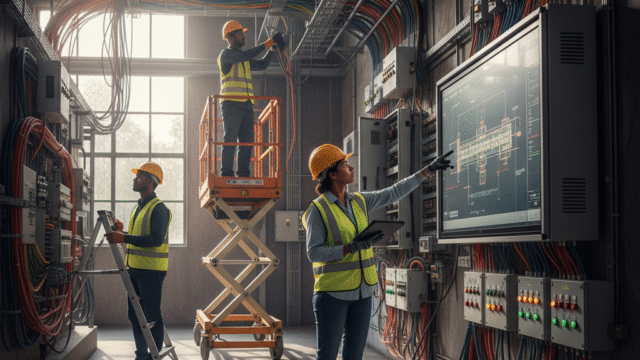
St Andrews, Fife, a town renowned globally for its historic university and the Old Course, is a unique blend of ancient stone structures and modern living. Behind the scenes, ensuring the safety and functionality of this iconic locale are the electricians of St Andrews. These skilled professionals are vital to maintaining the town’s domestic, commercial, and historical infrastructure, tackling everything from minor repairs in student lets to complex rewiring of centuries-old buildings.
The Crucial Role of a St Andrews Electrician
The work of a local electrician in St Andrews goes far beyond simply fitting sockets and changing light bulbs. They are tasked with a wide spectrum of services, often requiring specialised knowledge due to the town’s varied architecture. The properties range from large, historic family homes and commercial premises sultantoto to modern university accommodation blocks and small, rented flats. This requires expertise across different wiring systems and regulatory standards.
Key services provided by local electricians include:
- Residential Services: Full or partial rewiring, installation of new circuits, fuse board (consumer unit) upgrades to meet modern safety standards, fault finding, and installing energy-efficient LED lighting.
- Commercial Expertise: Electrical maintenance for businesses, hotels, and the numerous shops lining Market Street. This often includes emergency lighting, security system wiring (CCTV and alarms), and specialist data/networking installations.
- Landlord & HMO Compliance: Given the significant student population, many electricians specialise in providing mandatory Electrical Installation Condition Reports (EICRs), Portable Appliance Testing (PAT testing), and installing interconnected smoke and heat alarms for Houses in Multiple Occupation (HMOs) and rental properties.
Quality, Qualification, and Compliance
For any resident or business owner in St Andrews, selecting a qualified and reputable electrician is paramount. In Scotland, it’s essential to look for professionals who are registered with recognised bodies. Key accreditations to look for are SELECT (The Electrical Contractors’ Association of Scotland) or the NICEIC (National Inspection Council for Electrical Installation Contracting). Registration with these schemes ensures that the electrician’s work is regularly assessed, meets the strict safety standard of BS7671 (the UK wiring regulations), and is covered by the necessary insurance.
Local companies often build decades of experience, giving them an unparalleled knowledge of the specific electrical challenges presidenttoto presented by older Fife properties. For instance, some firms have worked on historic landmarks like the St Andrews Castle and Cathedral, demonstrating a high level of expertise in sensitive environments.
The Need for Emergency Response
Electrical faults rarely adhere to business hours, and in a busy town like St Andrews, a sudden loss of power or a dangerous fault requires immediate attention. Many local electrical firms offer 24/7 emergency call-out services. Whether it’s a tripping circuit in a student flat on a weekend or a critical power outage at a commercial establishment, an emergency electrician can typically arrive quickly—often aiming for under an hour—to diagnose the problem and make the system safe.
While standard hourly rates for electrical work in the St Andrews area often sit between £45 and £60, emergency call-out charges and out-of-hours rates will naturally be higher, reflecting the urgency and inconvenience. However, the cost is a small price to pay for ensuring the safety of occupants and preventing further damage to property.
Looking Ahead: Sustainability and Modernisation
As St Andrews embraces modern technology, the role of the electrician is evolving. They are increasingly involved in future-proofing properties by installing Electric Vehicle (EV) charging points, setting up smart home automation systems, and integrating renewable energy solutions. From ensuring a historic cottage has safe, modern wiring to installing cutting-edge smart lighting controls, the electricians in St Andrews are the backbone of the town’s electrical safety and its transition into a modern, energy-efficient future.
Check this out: Electrician in St Andrews
If you’re facing an electrical issue or planning an upgrade, seeking a free, no-obligation quote from a local, accredited St Andrews electrician is the best starting point to presidenttoto ensure a safe, efficient, and compliant solution.